Lateral pressures perform certainly not introduce themselves with excitement. They appear as a slow head in a helical pile foundations basement wall structure, an understated design at the top of a framed bay, or even a hairline split that prolongs after a heavy rainfall. Over time, those tiny indicators amount to use troubles and also, in awful situations, a loss of architectural dependability. Tieback anchors as well as their helical relatives solve that complication at the source. They interact stable ground or even stone outside the failing region and pull a structure back in to balance. When made as well as set up appropriately, they are peaceful artists that extend the lifestyle of preserving devices, cellar wall surfaces, as well as whole entire buildings.
I have seen tiebacks rescue growing old commercial homes where street growths pushed new lots into old helical piles foundation applications bases, and where digging for a surrounding project left behind a wall surface unbraced. The typical string in productive end results was actually certainly not a particular item however profundity in ground analysis, careful tons screening, and also reasonable assumptions concerning stiffness and also movement.
Where sidewise reliability fails
Commercial structures encounter sidewise lots from earth stress, additional charge coming from nearby sidewalks as well as web traffic, hydrostatic stress, wind on below-grade define partially available garages, and also sometimes seismic shaking. The best typical wrongdoers are out of balance backfill and groundwater. On a five-story resort I observed in the Midwest, the lesser auto parking amount wall structure had been put versus a lumpy backfill put as well quickly after the wall structure healed. Tiny horizontal splits showed up at the lesser third of the wall surface within a year. Reports led to overstress from sidewise stress and also inadequate link of the wall to the piece diaphragm. The repair turned on helical tieback anchor setup incorporated with split injection and a much better drain pathway, certainly not a more thick wall.
The physics is direct. Soil puts in sidewise pressure that raises along with deepness. If the standing up to system, often a wall surface fixed at foundation and also restrained on top, may not resist the minute, the wall surface disperses. That deflection rearranges tension and may reduce need rather, but once splits create and also water discovers a path, wear and tear accelerates. Tieback anchors intervene through lugging tensile lots into more powerful component further coming from the wall, which lowers flexing in the wall structure and hats deflection.
What a tieback support does
A tieback support is a tension component installed via a construct, commonly at a down angle, to transmit load coming from the construct to the ground or rock mass behind the active wedge. The support possesses 3 crucial parts: the bond area embedded in experienced strata, a free of charge duration that extends elastically to enable tensioning, as well as a scalp that affixes to the structure. When preloaded, the support creates a maintaining force that counters active the planet pressure. The anchor does not deal with tension, it bypasses the prone wall by attaching it to a much more trustworthy load course in the ground.
Helical tieback anchors make use of coils joined to a core shaft to produce capacity as they are actually oppressed into the soil. The installation twist associates to capacity, which gives quick responses. Grouted tiebacks develop capability through connecting to the dirt with cementitious cement. Both devices have a role. Helical anchors excel in granular or logical dirts where twist can be built and also mobilized rapidly, and they sparkle when get access to and also resonance restrictions are actually tight. Grouted tiebacks typically make sense in sands and crushed rocks at acumen or even when a rock connection area is needed.
When helical tiebacks are actually the correct tool
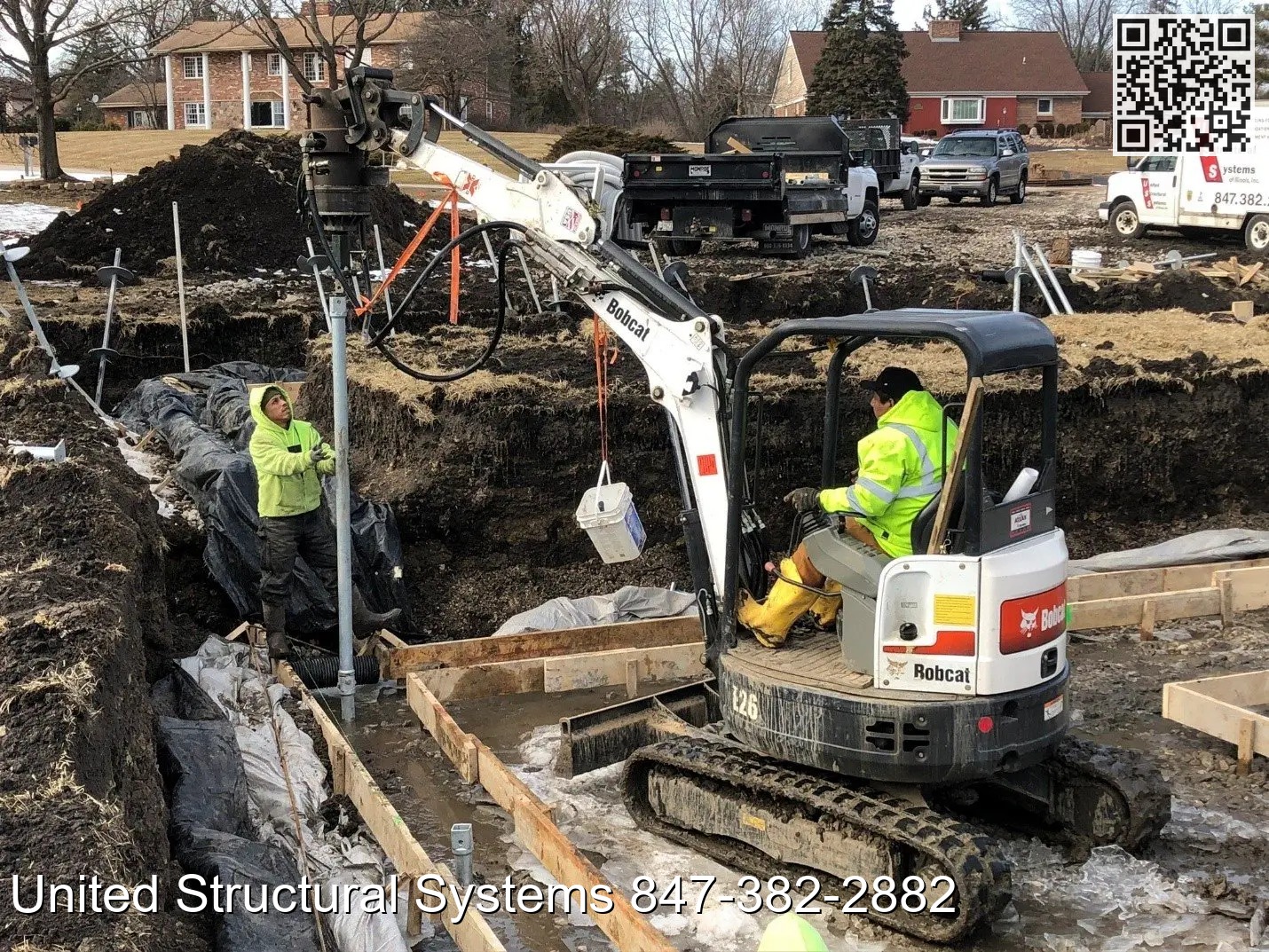
On infill internet sites along with poor get access to, helical tieback anchor installation could be executed along with pretty small, low-clearance tools. An expert staff may mount anchors from inside a building without removing pieces. At a distribution center in New Shirt, our team stabilized a 140-foot stretch of accepted groundwork wall without interrupting operations. Supports were installed from the interior, angled beneath pallet racks, and also tensioned versus new waler light beams at the wall surface face. The helical tiebacks paired with a boundary drainpipe decreased hydrostatic stress and offered the wall a trustworthy counterforce.
Helical anchors likewise function well when the routine can certainly not suit cement treatment times. The connection between torque and capability makes it possible for verification packing the exact same day. For urgent commercial foundation stabilization, that speed concerns. If a wall structure is moving as well as you need to have to stop progression before the next rainfall, helical tiebacks may be the variation in between a repair work as well as a rebuild.
Edge scenarios exist. Dense gravels along with cobbles can easily deflect helices, bring about crooked alignment or refusal. Because situation, switching to a pierced micropile-style tieback along with grout makes good sense. Organic soils and disposal area debris are actually one more red flag. You need to have to bypass questionable layers to discover a competent connection area, at times at higher lengths than actually planned. That is actually where preconstruction test anchors gain their keep.
How tiebacks interaction along with deeper structure systems
Lateral stabilization is seldom standalone. It connects into various other groundwork techniques. A modern-day commercial residential property may integrate commercial helical pile installation for vertical assistance with helical tieback anchors for sidewise security. I have actually likewise seen micropiles bring gravitational force lots while helical anchors managed reversing at a high maintaining wall surface. Micropiles as well as resistance stacks are actually superb for vertical load move via bad dirts to stone or even thick strata, but in pure tension side to side they have restrictions unless assaulted or even secured along with a deep connection zone.
Consider a retail container outlet improved gentle clays over timeworn clay. The pillars were supported by micropiles, 2 every column, put in to rock. The back launching dock demanded a 16-foot decrease along with a soldier stack wall. The style used helical tieback anchors for the wall, laterally bracing the device without transmitting sizable loads back right into the slab. That separation of duties always kept the structure tidy, as well as potential slab fixings would not threaten lateral stability. Micropile installation and also tieback anchors, when worked with, permit mobile fixing and also maintenance.
Commercial resistance pile setup, often called press piers, can additionally find a location. While protection stacks shine in structural foundation repair for negotiation, they are not normally used as primary sidewise components unless mixed with walers and also bracing. In deep foundation repair, I take a look at protection heaps for vertical adjustment and also helical tiebacks or even grouted supports for wall restraint. Combining units is certainly not duplication, it is department of labor.
Diagnosing sidewise trouble just before opting for anchors
Foundations that need tiebacks commonly reveal very early indicators: horizontal cracks near mid-height, angled cracks at corners, protruding of brickwork units, or spalling where rebar has actually worn away from water seepage. Prior to any kind of commercial foundation repair, map the gap pattern and also take a handful of elevation gos along with a laser throughout the wall structure. If the curvature is actually focused at the facility of a board, a tieback design along with closer space there may be actually warranted. If the best of wall was meant as a birth control connection however the support screws are oxidized or missing, take into consideration updating the hookup in tandem along with supports. Foundation crack repair through epoxy shot has the most effective value after motion quits, not before.
For below-grade wall surfaces, groundwater administration establishes excellence. I have actually drawn on beautifully put up tiebacks that performed their task while water continued to press with cold joints and also splits. The wall remained upright, but the room remained moist as well as unhealthy. French empties, weeps, and also favorable drain out of the wall lessen the line-of-defense work that tiebacks are actually forced to carry out. If hydrostatic pressure is actually high, prepare for drains pipes as well as septic tank capacity in the same breath as anchors.
Design points to consider that make or even breach performance
Tieback concept depends upon reputable dirt records as well as practical bunch designs. A general rule: if you are counting on supposed ground parameters coming from a paper throughout community, you have opened the door to callbacks. Pull a few borings or even conoid penetration tests along the wall placement. Seek the acumen to stable product and also the presence of layers that could possibly creep under continual bunch. Silts that appeal organization on the first day may loosen up under long-term stress. When using helical anchors, track setup torque every feet to pinpoint feeble seams.
Anchor geometry is more than a layout. The slant of setup, commonly 10 to 25 levels listed below parallel, impacts disengagement efficiency as well as the danger of facing utilities. The connect region length, whether grouted or described through helical layer stack, must entirely develop capacity. In helical tiebacks, the lead configuration matters: a number of coils spaced 3 sizes apart on the shaft reduce team communication and also improve weight circulation. For grouted tiebacks, hole diameter and cement toughness specify the bond capacity, yet thus does boring procedure. Overly aggressive exploration can asperse the borehole in clays and also reduce bond.
Load screening is actually non-negotiable. I like a program that includes at least one efficiency test to breakdown or 1.5 times design tons, as well as verification examinations on development anchors to 1.25 opportunities style bunch. Maintain a specific eye on creep under sustained tons. A simple criterion, such as lower than 1/8 inch action in 10 moments at optimal exam tons, provides a peace of mind inspection. If an anchor sneaks, reassess the bond zone or switch to a different system.
Head information matter as much as the dirt. A tieback head normally bears upon a waler, commonly steel network or wide flange, that spreads out the aspect bunch in to the wall structure. Poor waler fit causes squashing or tension attentions and may telegraph as brand new splits. On a brick-infill wall structure, plates or even channels backed through grout can easily relax the user interface. For cast-in-place concrete, coring a neat hole as well as making use of a hot-dipped galvanized platter with a recessed almond always keeps servicing basic and rust in check.
Installation truths on commercial jobs
Commercial helical tieback anchor setup does well when workers recognize the structure as well as the neighbors. Supports put up from interior spaces call for defense for appearances as well as dust control. Fit-for-purpose devices, generally a torque motor placed on a mini-excavator or even skid-steer, requires sufficient space to establish torque without jumping off a cavalcade line. Where area is cramping, hand-held hydraulic systems can easily put in smaller-diameter helical anchors, but you trade velocity and capacity.
On a healthcare facility retrofit, our installation window ranged from 9 p.m. to 5 a.m. to steer clear of hindering image resolution rooms. We sequenced anchors to ensure approximately 2 adjacent supports were actually put up at once, steering clear of short-term reduction of wall help. Pre-staging walers and equipment throughout the day lessened sound at night. The anchors were actually tensioned progressively, 25 per-cent to seat, 75 per-cent to technique concept, after that full tons after a quick requirement check. That step-by-step method stays clear of shock packing a breakable wall.
For grouted tiebacks, the website should accommodate grout batching and also spoil monitoring. In urban cellars, that could be the constraint that pokes the selection towards helical anchors. Where cement is needed for layout intentions, use a tremie tube to position cement from the bottom up as well as observe profits. Overdrilling without inspecting welcomes crash and infected connection areas in smooth soils. A small slip below comes to be a repeating routine maintenance call later.
Integrating tiebacks with other repairs
Tiebacks are actually one component of structural foundation repair. They combine typically along with deep foundation repair procedures utilized to resolve settlement or even poor bearing. A common pattern in commercial foundation stabilization resembles this: assistance gravitational force tons along with helical piles or micropiles, support sidewise lots along with tieback anchors, then deal with wall condition along with gap shot, patching, and also basement waterproofing. That order protects alignment and also decreases added damages in the course of repair.
When a wall structure has actually broken, foundation crack repair by epoxy shot brings back structural connection, yet just after motion is managed. For moist wall structures, polyurethane crack treatment can quit leakages prior to epoxy repair services. In brickwork, carbon thread bands can easily share obligations with tiebacks to confine bulging between anchors. The key is actually realizing what each component does well. Helical piles and protection heaps manage vertical lots, micropiles take care of upright tons where rock is centered or even access is actually tight, helical tiebacks and also grouted anchors manage side loads, and also surface repairs bring back longevity as well as watertightness.
Costs, timetables, and also what owners ought to expect
Owners talk to pair of questions: How long will it take, as well as just how much will it cost? The honest answer is ranges with emergencies. For a traditional business helical tieback venture on a 100-foot wall surface along with support spacing near 6 to 8 feets, foresee 15 to 20 supports. With excellent gain access to as well as straightforward dirts, a staff may put up as well as stress 6 to 10 helical tiebacks each day. That yields a two to 4 time installment window plus use and prep. Grouted supports take longer as a result of boring, covering, and cement remedy, commonly a week or even additional for similar scope.
Costs depend on span, capacity, accessibility, as well as screening needs. Helical tieback costs typically falls in between mid four physiques to reduced five figures per support for office settings, with metropolitan jobs on the uppermost end. Grouted tiebacks can be comparable per anchor but along with greater internet site coordinations prices. What owners can trust: jobs that acquire proper investigation and testing have less modification purchases. The cheapest anchor that falls short a creep exam is certainly not a bargain.
Common pitfalls as well as exactly how to stay clear of them
The most recurring bad move is actually handling tiebacks as a magic bullet without resolving water as well as drainage. A wall limited through anchors can easily still fall apart from caught dampness, freeze-thaw patterns, as well as corrosion. Another bad move is dismissing geometric restrictions. Anchors can easily clash with utilities, lessee rooms, or future diggings. On a mixed-use venture, an uncoordinated tieback pattern disrupted an anchor tenant's considered elevator pit two years later, as well as many supports must be actually left and replaced.
Overreliance on directory capabilities without web site proof also results in trouble. I maintain a record of installation torque, examination lots, as well as movements for every anchor, not only the test anchors. Design arise. If twist declines all of a sudden in a region, probe additionally. It may be actually a laid to rest trough, a filler pocket, or a soft joint. Adapting right away, with the engineer interacted, always keeps the venture on track.
Choosing between helical, resistance, and also micropile systems
Engineers and also service providers commonly face a three-way option one of helical piles, protection piles, as well as micropiles, especially when repair work demand both vertical and also side upgrades.
- Helical stacks and also helical anchors: Ideal when access is actually confined, resonance has to be actually low, as well as urgent capacity confirmation by means of torque is actually useful. They satisfy a vast array of grounds yet problem in extremely dense gravels along with cobbles or boulders. Resistance heaps: Solid alternative for dealing with settlement deal under existing footings where hydraulic ports can push stacks to rejection against the building. They are mainly upright aspects, certainly not sidewise, unless prepared in struggling pairs or used along with walers. Micropiles: Extremely functional drilled-and-grouted components that operate in limited rooms and by means of blockages, along with exceptional efficiency to rock. They hold higher lots but include additional tools as well as cement dealing with than helical systems.
That quick comparison conceals distinction. The quickest routine is actually not regularly the most affordable risk. An internet site along with variable fill may justify micropiles and grouted tiebacks in spite of the slower speed, since boring as well as grouting can stabilize the irregularity. On the other hand, in even clay-based with reputable twist correlation, commercial helical pile installation along with helical tiebacks returns speed, reduced disruption, as well as well-maintained documentation.
A short field story
A waterfront stockroom in the Southeast possessed a keeping wall surface that bent 2 ins over 12 feet of height, pressing toward the inner parts. The wall supported to a slim alley along with powers laced through the right-of-way. Digging was off the table. Our team mapped utilities, at that point set a helical tieback pattern coming from the inner parts at 15 degrees listed below horizontal, targeting a sandy coating at 18 to 24 feet where test probings revealed excellent density. Walers were actually smoothed steel networks secured along with adhesive dowels right into the wall structure. Our experts set up 22 anchors over 3 nights, with installment twists ranging coming from 5,500 to 7,000 foot-pounds, connecting to develop loads of 25 to 35 kips. Evidence exams went efficiently, yet pair of supports presented higher-than-expected movement at bunch. Dirt logs presented a thin silt lense at that altitude. Our experts expanded those 2 supports an added 5 feets to catch the much deeper sand as well as retested. Movement dropped to within criteria. Six months after completion, the wall surface remained stable, the fracture distances had certainly not increased, and the internal space stayed dry after hurricanes due to a brand-new drain and also sump.
That job reinforced a course I relearn on every task: the ground tells you what it are going to take, not the other technique around.
Quality control that pays out off
Documentation is part of the work. For office tasks, always keep a complete record: support I.d.s, locations, slants, sizes, helix arrangements or connection spans, installment twists or even cement amounts, test tons, as well as motions. Pictures of heads and also walers after tensioning support future teams comprehend the repair service. Web site assessors and also developers ought to examine the 1st numerous anchors in person, at that point at rational landmarks. These routines sound bureaucratic up until the time a loading dock roof covering enhancement shifts surcharge onto a wall surface, and the owner requests the initial capabilities as well as factors of safety.
Corrosion defense should have focus. Hot-dipped priming, epoxy coatings, dual rust security for grouted tiebacks with sheathing, as well as effective specifying at heads expand life span. On seaside internet sites or even where de-icing sodiums exist, perform not skimp. Define the protection device very early so lead times perform not imperil schedules.
Bringing it together
Tieback supports are certainly not attractive, but they are honest. They bring in a quantifiable commitment: use a recognized counterforce where the construct requires it very most. When coupled with clever water drainage, compatible deep foundation repair components, as well as thoughtful specifying, they come back control to proprietors and resource managers who require structures to work day in day out. The greatest results come from restrained design, straightforward screening, and also teams who recognize both the design and also the ground. If a wall structure is bowing or even a cellar is tackling water, the correct combination of helical tieback anchors, helical piles or micropiles, and also uncomplicated foundation crack repair can turn a slow issue right into a secure, predictable asset.
 Ask ChatGPT
 Ask Grok
 Ask Perplexity
 Ask Claude
 Ask Google AI
 Ask You